

Designing a custom property offers a rare opportunity to move beyond standard building codes and create a space that truly supports your lifestyle. Deciding where to put electrical outlets during the framing stage prevents the future frustration of tangled extension cords and inaccessible plugs hidden behind heavy furniture.
A modern home requires a strategic map of power distribution that accounts for everything from home offices to holiday lighting. At Aaron’s Electrical Service, we believe that efficiency starts with a professional layout that anticipates both current needs and future technological shifts. By integrating outlets into the architectural design of your home, you improve the functionality of every room while maintaining a clean, professional aesthetic throughout the property.
Why Outlet Placement Matters
Electrical outlets are essential for powering your devices, appliances, and lighting fixtures. However, poor outlet placement can lead to issues such as overloaded circuits, inconveniently placed plugs, or even fire hazards. In addition to functionality, placing outlets in the right spots also helps to meet local building codes and safety standards.
As your residential electricians in Houston, TX, we focus on striking the right balance between maximizing convenience and ensuring safety. So, where should electrical outlets be placed in a new home to optimize their use and comply with code?
The Kitchen
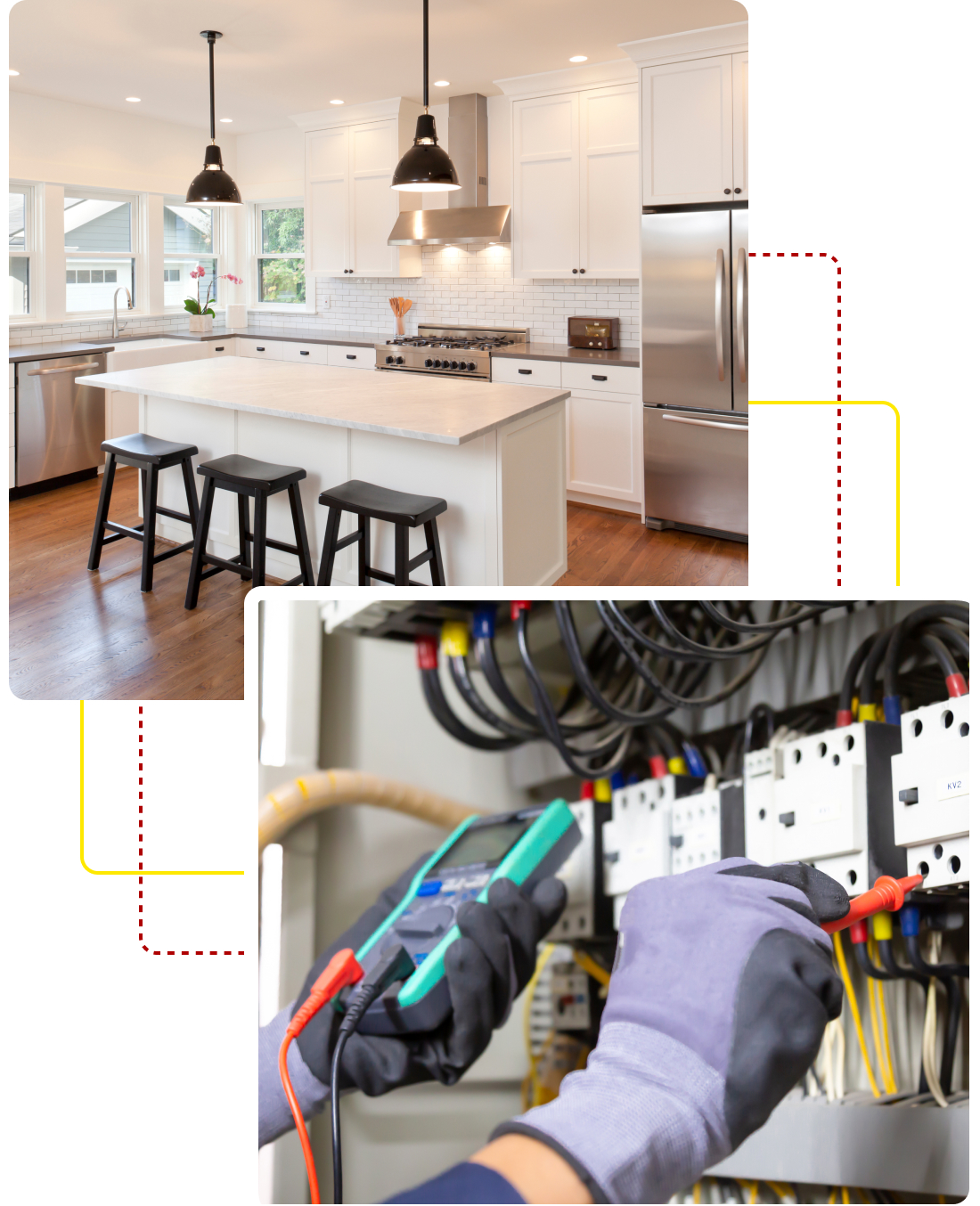
Kitchens are the most electrically demanding areas in a modern residence, requiring a high concentration of circuits and specific safety hardware. Beyond the basic requirements for large appliances like refrigerators and dishwashers, you must consider how you use your countertops.
Installing outlets every two to three feet along the backsplash ensures that blenders, coffee makers, and air fryers can operate simultaneously without crowding. Pop-up outlets integrated directly into a kitchen island provide a sleek solution for food prep areas where wall space is unavailable.
Where should electrical outlets be placed in this space? Height and accessibility are the primary technical factors.
Outlets should sit high enough to avoid spills but remain easy to reach. We also recommend dedicated circuits for high-draw items like convection ovens or built-in microwaves to prevent nuisance tripping during meal preparation.
In Houston and Dallas-Fort Worth, where open-concept kitchens are the standard, we place outlets in pantry closets for cordless vacuum charging and inside cabinets to hide bulky appliance plugs. This specialized approach to residential infrastructure ensures your kitchen remains a high-performance zone.
Creating a Future-Proof Home Office
In this space, a standard outlet behind the desk may not be sufficient for a setup involving multiple monitors, printers, and charging stations. We suggest installing a series of outlets at desk height to avoid crawling under furniture to plug in peripherals. Furthermore, including USB-C integrated outlets directly into the wall plates allows for faster charging of mobile devices without the need for bulky adapters.
Outlets in Living and Common Areas
These spaces are typically home to many electronic devices, such as lamps, televisions, gaming consoles, and chargers. In these areas, outlets should be placed on every wall that is expected to support furniture or electronic equipment. A good rule of thumb is to have an outlet every 6-10 feet along the wall.
This way, you will have enough outlets to meet your needs without the hassle of extension cords or power strips. Outlets should also be placed about 12-18 inches above the floor to make them accessible and avoid obstruction from furniture.
Hiding all cabling can help you achieve a “floating” television look. This requires placing recessed outlets directly behind the expected mounting position of the screen.
We also suggest floor outlets in large, open living areas where seating is positioned away from the walls. This allows you to power lamps or charge laptops from your sofa without running hazardous cords across the floor.
Bedrooms and Personal Charging Zones
In the bedroom, standard building codes often place outlets in the center of walls, which usually end up hidden behind the headboard. A more efficient strategy involves placing outlets on either side of the bed, specifically aligned with nightstands.
This layout supports bedside lamps and phone chargers while keeping the wall behind the bed clear for decor. Including an outlet inside a walk-in closet is also a smart move for powering iron stations or localized lighting systems.
When planning where to put electrical outlets in a new home, do not overlook the importance of the laundry room and hallways. Hallway outlets are essential for vacuuming and nightlights, while the laundry room requires a dedicated high-voltage outlet for the dryer and standard outlets for steamers or folding station lighting.
Outdoor Living and Energy Resilience
Texas residents spend a significant amount of time in outdoor living spaces. Weatherproof outlets are necessary on patios, near outdoor kitchens, and under the eaves for holiday lighting.
If you plan to install a pool or hot tub in the future, pre-wiring for these high-draw systems during construction saves thousands of dollars in later excavation and drywall costs. We advocate for a tech-forward approach that includes pre-wiring for electric vehicle (EV) chargers in the garage, ensuring your home is ready for the next generation of mobility.
Outlets in Bathrooms
Bathroom outlets should be installed at least 3 feet away from water sources, and GFCI (Ground Fault Circuit Interrupter) outlets should be used in all bathrooms. These outlets are designed to prevent electrical fires and shocks by shutting off power if there is an electrical malfunction.
Outlets should also be placed above bathroom countertops for easy access to power for items like hairdryers, electric razors, and toothbrushes.
Designing the Perfect Outlet Placement
A home that anticipates your power needs is a home that operates with a higher level of efficiency. From the first wire pulled to the final faceplate installed, our team is dedicated to delivering results that stand the test of time and provide a seamless power experience for your family.
By thinking through the daily flow of your household, we help you create a wiring map that eliminates the “dead zones” common in older properties. This level of planning is an investment in the long-term comfort and resale value of your home. We also maintain the capability for 24/7 top-rated commercial electrical repairs in Houston, TX, for business owners who need similar technical precision in their professional facilities.
If you’re building a new home or planning a renovation, don’t hesitate to contact Aaron’s Electrical Service for expert advice on electrical outlet placement. Call us today to schedule a consultation and ensure your home’s electrical system is up to code and meets your needs.