

An electrical switch looks simple, but different switch designs solve very different problems. Some switch types are built around wiring layout, like 3-way and 4-way switching, while others focus on comfort, like dimmers and smart controls.
Choosing the right one helps lighting and devices work the way you expect, while also supporting safer operation in common household areas. This guide breaks down the types of electrical switches and where each makes sense at home.
Need help choosing, upgrading, or troubleshooting electrical systems? At Aaron’s Electrical Service, we provide top-rated electrical services in Houston and Dallas–Fort Worth.
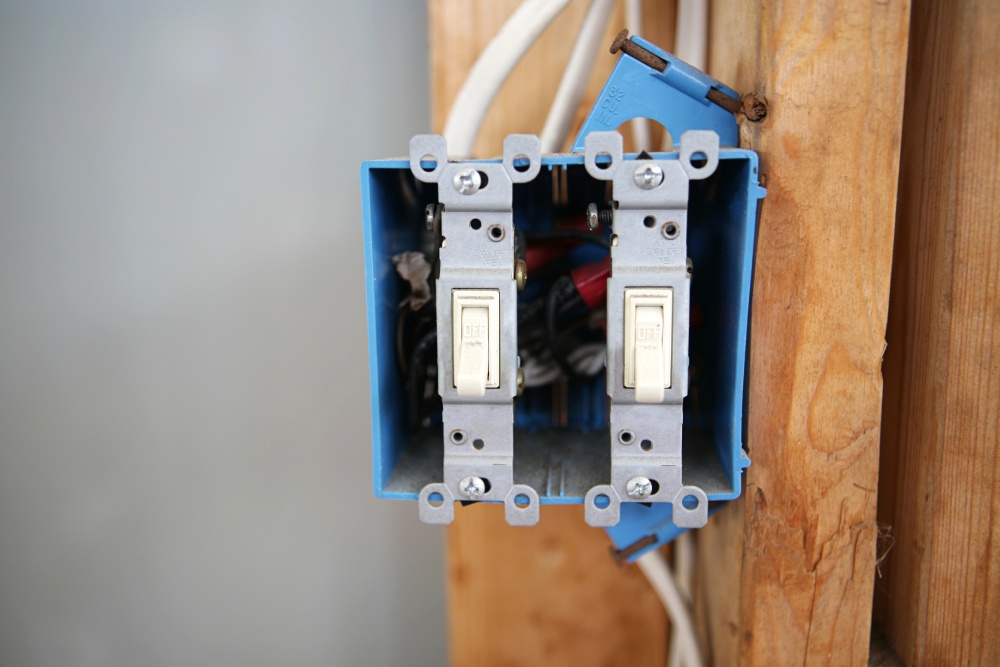
Single Pole Switch
The single pole switch is the most common wall switch in homes. It controls one light or device from one location and acts as a basic on and off control. In electronics terms, this is often described as an SPST style switch, meaning one circuit path is opened or closed.
Use it for bedrooms, closets, and most rooms where a single door controls one main light.
Double Pole Switch
A double pole switch controls two conductors at the same time, so it can switch a higher load circuit in a single action. In pole and throw terms, a DPST setup can open or close two circuits together. In residential settings, double pole switching is often associated with 240V loads, depending on local code and application.
Use it for specific heavy appliances or equipment circuits when a dedicated disconnect style control is required.
3-way Switch
A 3-way switch lets one light be controlled from two different locations, such as the top and bottom of a staircase. It uses a common terminal plus two traveler terminals that connect between the pair of switches. This setup is popular anywhere people enter a space from two sides.
Use it for staircases, long hallways, or a large living room with multiple entrances.
4-way Switch
A 4-way switch is used when a light needs control from three or more locations. It is installed between two 3-way switches and works as a crossover point for the traveler wires. In practice, this is what makes it possible to add a third wall control in a long corridor or a large open plan area.
Use it for long hallways, big rooms with multiple doors, and multi-entry spaces.
Toggle Switch
Toggle switches have a lever that flips up and down, and they are common in older homes. They can be single pole, 3-way, or other internal configurations, but the key idea is the physical action. Many people still like toggles because they are easy to use without looking, especially when hands are full.
Use it when matching existing wall plates, or when a simple, durable feel is preferred.
Rocker Switch
Rocker switches use a wide paddle that you press on one side for on and the other side for off. They are common in modern interiors and are easier for many people to operate than small toggles. Rockers also pair well with multi-gang plates in kitchens and living rooms because the switch face is larger and more uniform.
Use it for updated interiors, kitchens with multiple lighting zones, and rooms with frequent switching.
Push Button Switch
Push button switches turn a load on or off with a press, and some designs return to a neutral position after being pressed. This family includes latching styles that stay in the chosen state and momentary styles used for specific controls. Momentary switching is a common concept in switch fundamentals, especially for signaling rather than continuous power control.
Use it for doorbells, garbage disposal controls when designed for that purpose, or specialty lighting controls.
Dimmer Switch
Dimmers adjust light output rather than simply turning it on or off. Many modern dimmers work well with LED lighting, but they still need compatibility between the dimmer model and the bulb type. Dimmers can help set a softer mood in dining areas and bedrooms, and they can reduce glare in TV rooms.
Use it for dining rooms, bedrooms, living rooms, and any space where variable light levels improve comfort.
Smart Switch
Smart switches add app control, schedules, voice assistant integration, and automation routines. Some can work in multi-location circuits, but a 3-way or 4-way setup can require specific wiring and compatible devices. Many electrical outlet and switch installers also recommend checking neutral wire availability because some smart switches need it.
Use it for exterior lights, vacation lighting schedules, and busy household areas where automation saves time.
GFCI Protected Switch or Combo Device
In some locations, shock protection is a major concern, especially near water. GFCI protection works by comparing current on the hot and neutral conductors and tripping when there is an imbalance, which can happen during a ground fault. A common way this appears at the wall is a combo device that pairs a switch with a GFCI protected receptacle, which is useful in garages, laundry areas, or utility spaces.
Use it in areas that need added shock protection, based on local requirements and placement rules.
Top-rated Electrical Services in Houston & Dallas-Fort Worth
The right switch choice is not about fancy features. It is about better control, better comfort, and fewer headaches every day. At Aaron’s Electrical Service, we deliver top-rated residential and commercial electrical solutions across Houston and Dallas-Fort Worth, backed by skilled and licensed electricians who respect your time with on-time, quality service.
We are a Christian family-owned service and answer calls 24/7. After-hours help is available because electrical problems do not follow a schedule. Expect fair, competitive pricing, fully stocked service vehicles, and a customer-first approach rooted in honesty and trust. Contact us today to request an appointment and ask about our current specials plus the life-time workmanship warranty.