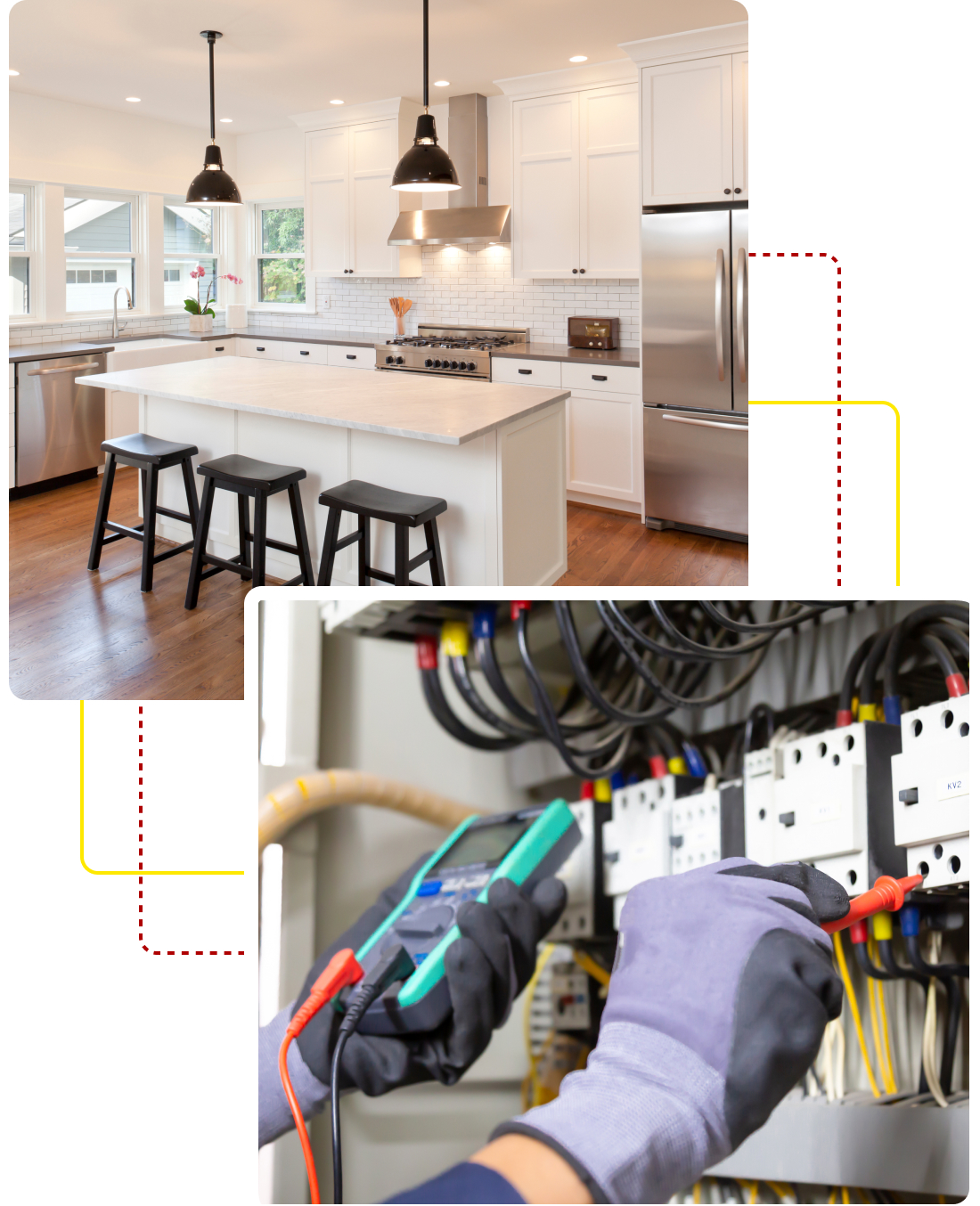


A total power failure across two different properties might look identical, but the technical reality behind the walls is often worlds apart. Gaps in infrastructure and other considerations explain why the choice between an industrial vs. commercial electrician remains a make-or-break decision for property owners.
Misidentifying the specialist you need can lead to costly code violations, prolonged downtime, and avoidable safety hazards that threaten your bottom line. At Aaron’s Electrical Service, we focus on providing the technical accuracy required to keep these distinct systems running at peak efficiency.
This guide breaks down the specialized training and environmental demands of each field, ensuring you have the right professional at the helm when your operations are on the line.

Understanding the Differences Between Industrial Vs. Commercial Electricians
At first glance, industrial and commercial electricians may seem similar, but the scope of their work and the environments they service are quite different. Both types of electricians are highly trained, but their skills and areas of expertise cater to different kinds of electrical systems. While both work with large-scale electrical systems, the complexity and scale of the projects they handle can differ significantly.
Defining the Commercial Electrical Environment
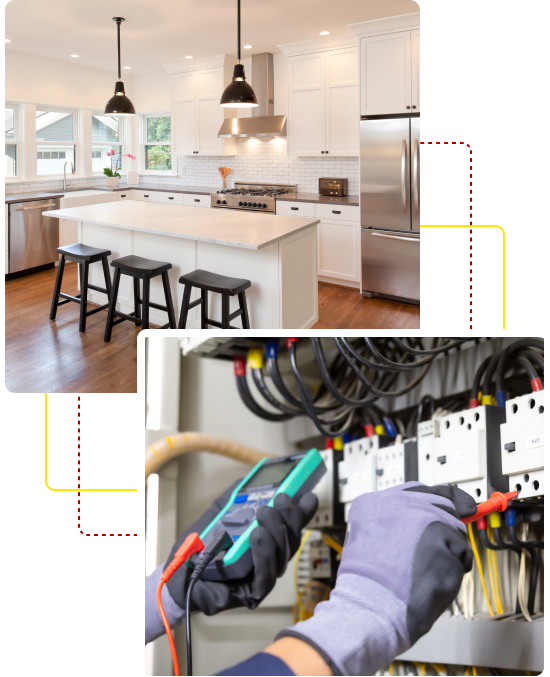
Commercial electrical work is primarily centered on public-facing and employee-occupied spaces. This includes retail outlets, office complexes, hospitals, and educational institutions.
In these settings, the electrical infrastructure is designed to support lighting, HVAC systems, security alarms, and standard office equipment. The wiring methods often prioritize a balance between functionality and aesthetics, with most components neatly concealed within walls or ceilings to maintain a professional appearance.
When managing commercial electrical installations, the focus is on providing a stable and safe environment for the public. These systems typically utilize single-phase or low-voltage three-phase power.
We emphasize efficiency and cost savings in these environments by integrating smart lighting controls and high-efficiency power distribution. Because commercial buildings have high occupancy rates, we prioritize fire safety and emergency backup systems to protect both the occupants and the physical assets of the business.
The Technical Intensity of Industrial Electrical Work
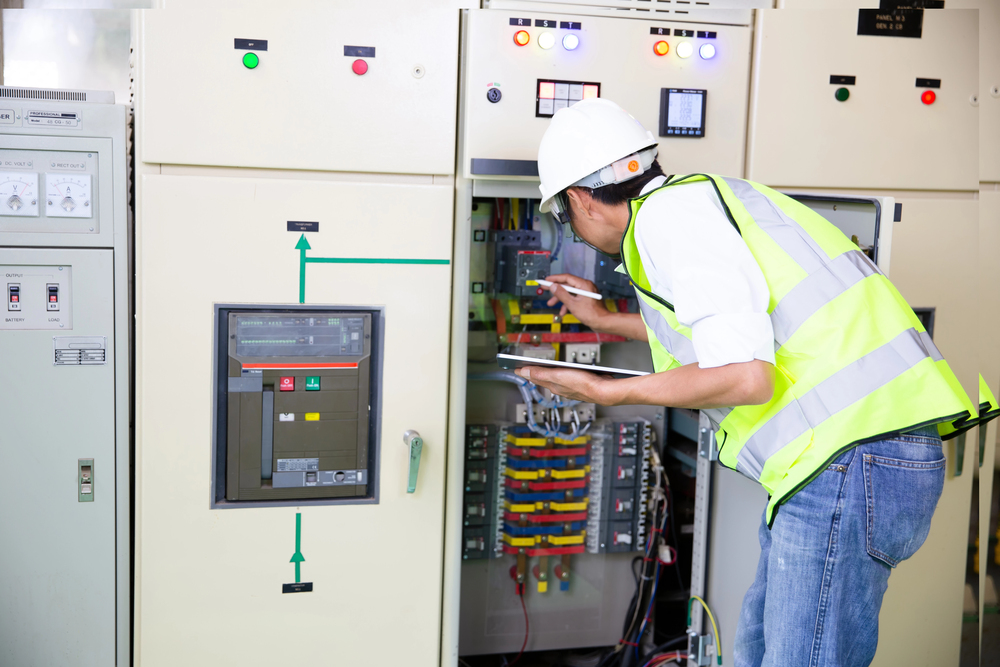
The differences between a commercial vs. industrial electrician become most apparent when looking at the rugged demands of manufacturing plants, refineries, and large-scale warehouses. Industrial settings are dominated by heavy machinery, production lines, and massive motor control centers.
These facilities often require medium-voltage or high-voltage three-phase power to keep large-scale operations running without interruption. Unlike the concealed wiring of an office, industrial installations are frequently exposed in rigid metal conduits to allow for rapid maintenance and protection against harsh, corrosive, or high-vibration environments.
The role of an industrial electrician involves managing much more complex control systems, such as Programmable Logic Controllers (PLCs) and automated robotics. In these facilities, even a minor voltage fluctuation can halt an entire production line, leading to significant financial losses.
We have the skillset required to navigate these high-stakes environments, ensuring that every piece of heavy-duty equipment is properly grounded and calibrated for maximum uptime.
Safety Standards and Regulatory Compliance
The regulatory landscape differs significantly between the roles of an industrial electrician vs commercial electrician. Commercial work generally follows standard National Electrical Code (NEC) guidelines focused on public safety and occupant protection.
However, industrial facilities must adhere to much more stringent protocols, including NFPA 70E standards for arc flash safety and specialized lockout/tagout procedures. The risk of high-voltage incidents is much higher in a factory than in a retail store, necessitating advanced diagnostic tools and rigorous safety certifications.
Our team provides 24/7 top-rated commercial electrical repairs in Houston, TX, addressing the immediate needs of businesses that cannot afford to be without power. Whether it is a failed switchgear in a warehouse or a flickering light in a boutique, we arrive fully equipped to handle the specific safety requirements of the site.
Maintenance Requirements and System Criticality
Maintenance strategies also vary based on the criticality of the system. Commercial maintenance is often reactive or semi-regular, focusing on testing emergency lights or replacing ballasts.
However, industrial maintenance is typically predictive and highly structured. Industrial technicians use thermography and vibration analysis to detect failing components before they cause a catastrophic shutdown. This proactive stance is necessary because the cost of downtime in a manufacturing environment far exceeds the cost of a routine inspection.
We believe in bringing industrial-level precision to commercial clients. By utilizing modern diagnostic equipment, we identify potential points of failure in any system, regardless of its scale. By providing a clear, professional assessment of your infrastructure, we allow you to make informed decisions about repairs and upgrades before an emergency occurs.
Choosing the Right Partner for Your Infrastructure
Selecting the correct professional ensures that your electrical system remains functional and optimized for your specific industry. A mismatch in expertise can lead to inadequate installations, code violations, or even dangerous safety hazards.
If you run a business that requires reliable lighting, power outlets, or electrical equipment, you would likely need a commercial electrician. If you operate an industrial facility, you may need an industrial electrician to handle the installation, repair, or maintenance of large, specialized equipment.
Our skilled team is here to help with all your commercial and industrial electrical needs. Call us now to schedule a consultation and get the professional help you deserve!