

Quick Summary
Path lights handle movement and belong low, staggered, and dim enough to stay under three hundred lumens. Directional spotlights and floods do feature work, with beam angle deciding whether a single trunk or a whole wall gets covered. Well lights hide the hardware at grade, downlights reverse the direction and remove glare entirely, and hardscape units disappear into stone and stair treads. Bollards cover open ground on larger sites, while string lighting builds a ceiling over a patio. Most properties need two or three of these working together rather than any single type doing everything.
Walk down the outdoor aisle of any supplier, and the choices blur fast. Dozens of shapes, finishes, and beam angles sit side by side with almost nothing explaining what each one is for. The differences are real, though, and they have far more to do with where a fixture sits and what it points at than with how it looks on the shelf. Sorting the best landscape lighting for a property starts with understanding the job each type was built to do. Here is how they divide up in practice.
Path Lights for Movement and Safety
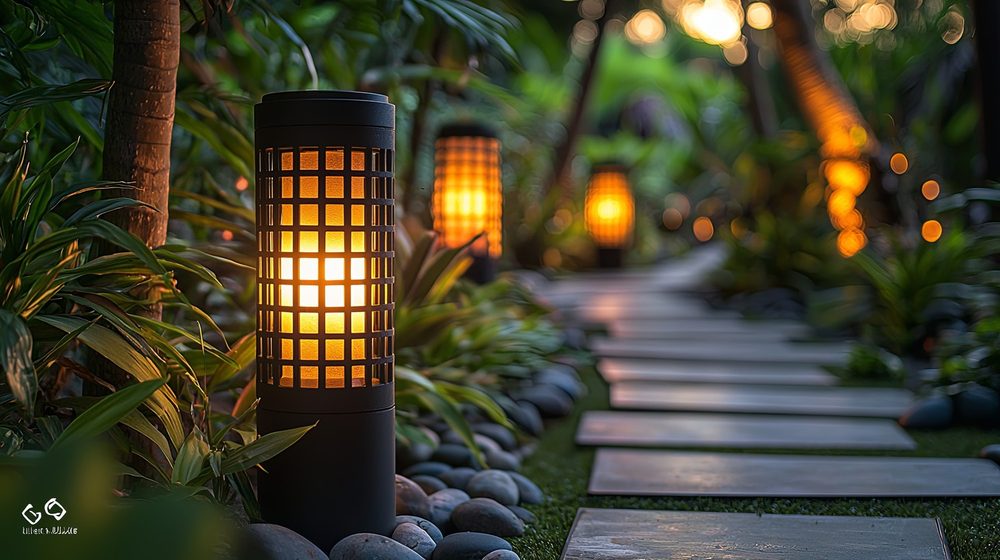
Anywhere people walk after dark deserves the first fixtures on a property, and a mushroom or shepherd style unit does that work. Each one throws a pool of light downward onto the walking surface, with a shade or louver keeping the source out of your eyes. Height sits between eighteen and twenty-four inches on most models, which lands the beam where feet go. Output stays low, since three hundred lumens or less handles a walkway comfortably. Staggering them on alternating sides beats a matched row, which reads as a runway. Spacing depends on the beam spread, so let the pools of light touch rather than sit apart as separate circles.
Spotlights and Flood Lights for Feature Work
Directional fixtures carry an adjustable head and a stake, which lets you aim a beam at whatever deserves attention. The narrow version concentrates output into a tight cone, ideal for a trunk, a column, or a piece of sculpture. The wide version spreads across a broader face, which suits a garage door, a hedge, or a wall. Beam angle decides everything, and swapping a 15° lamp for a 60° one changes the result without moving the fixture. Shrouds and glare guards keep the source hidden from anyone standing nearby. Adjustability is the real advantage, since a plant that grows will need the aim corrected in a season or two.
Well Lights for a Fixture You Never See
Some installations hide the hardware completely by setting it flush with the ground. A canister buried in soil or cut into paving points straight up, leaving nothing above grade except a grate you barely notice by day. Trees, columns, and building corners suit the approach, and so does any spot where a stake would be in the way of a mower. Drainage is the one constraint, since a canister that holds water will fail early in Texas clay. Adjustable models allow some aiming, though the range is narrower than a stake-mounted head. Cost runs higher than a surface fixture, and the clean look is what owners are paying for.
Downlights Mounted Above the Space
Putting the source overhead reverses the usual direction and produces a softer result. A fixture fastened high in a tree, under an eave, or on a pergola beam sends light down onto a patio, a lawn, or steps. Nothing sits at eye level to create glare, and the pattern of leaves above adds texture to the pool below. Mounting height determines coverage, so a higher position spreads wider and lands gentler. Access for maintenance deserves thought before installation, since a fixture thirty feet up is not a quick lamp change. Cable routing also has to be planned, and running it invisibly is where most of the skill sits.
Hardscape and Step Lights Built Into the Structure
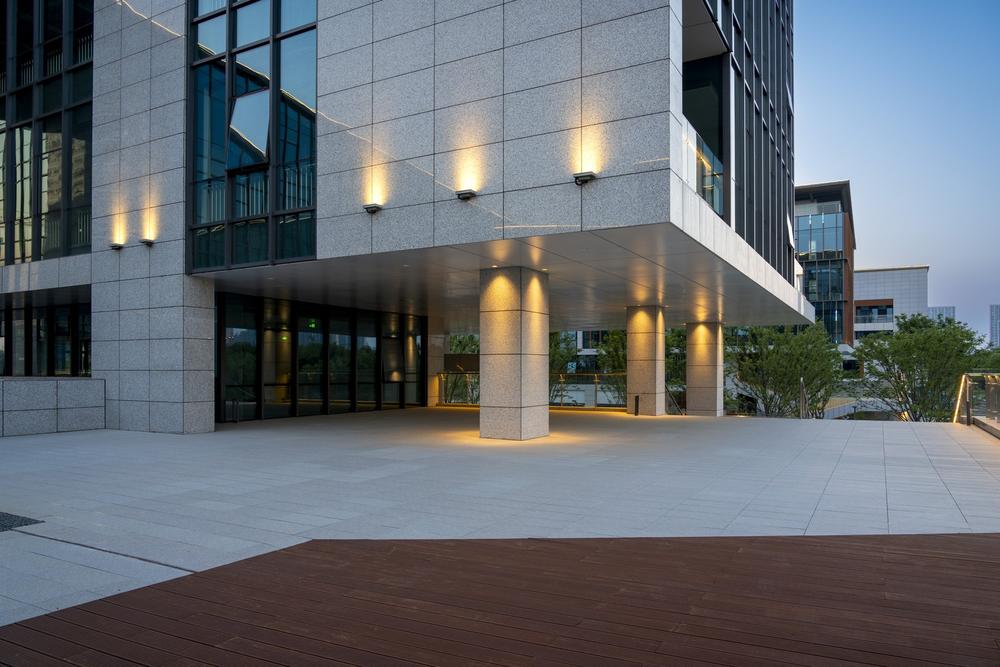
Masonry can hold the fixture itself rather than having one sit beside it. A thin linear unit tucked under a stair tread, a bench lip, or the cap of a retaining wall washes light across the surface below without showing itself. Stairs and grade changes benefit most, since a lit tread removes the guesswork from a step people take in the dark. Recessed sidelights set into a wall face do the same job on a patio. Installation is easiest during construction, though retrofitting into existing stone is possible with the right approach. Output should stay low, since a bright fixture at ankle height defeats the purpose.
Bollards for Wide Open Ground
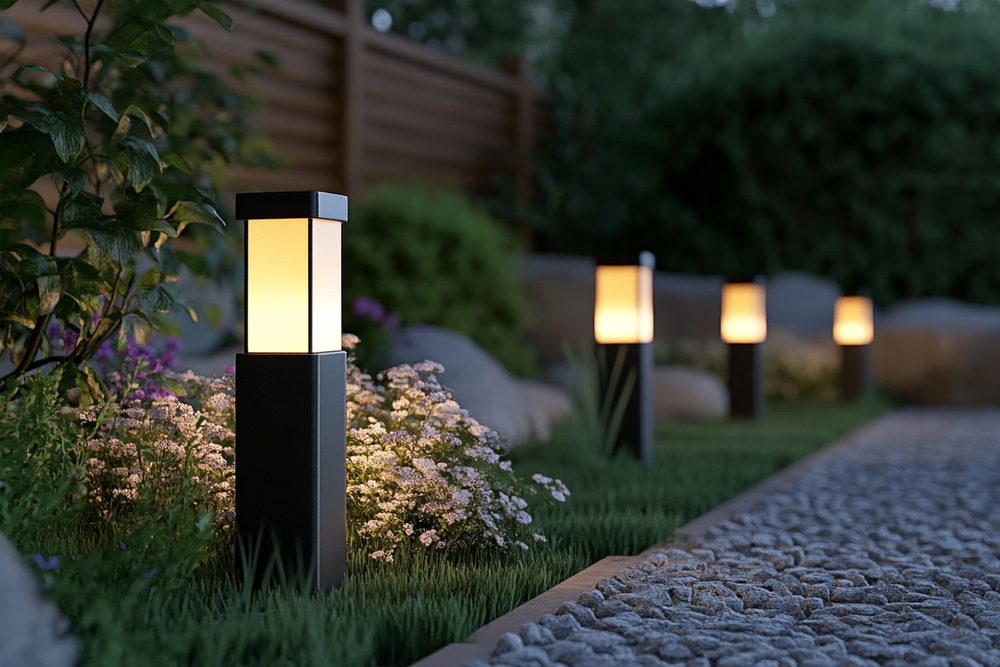
Larger properties need something taller than a path light and shorter than a full pole. A column standing three or four feet high with a shielded head fills that gap, spreading light in a full circle or a controlled arc depending on the optic inside. Long driveways, parking areas, and commercial walkways suit them, and the height covers far more ground per fixture than a low unit sitting near the ground does. Sturdiness is part of the appeal, since a metal column survives contact that would flatten a staked fixture. Spacing runs wider too, which brings the total fixture count down on a big site.
String and Festoon Lighting Over Gathering Areas
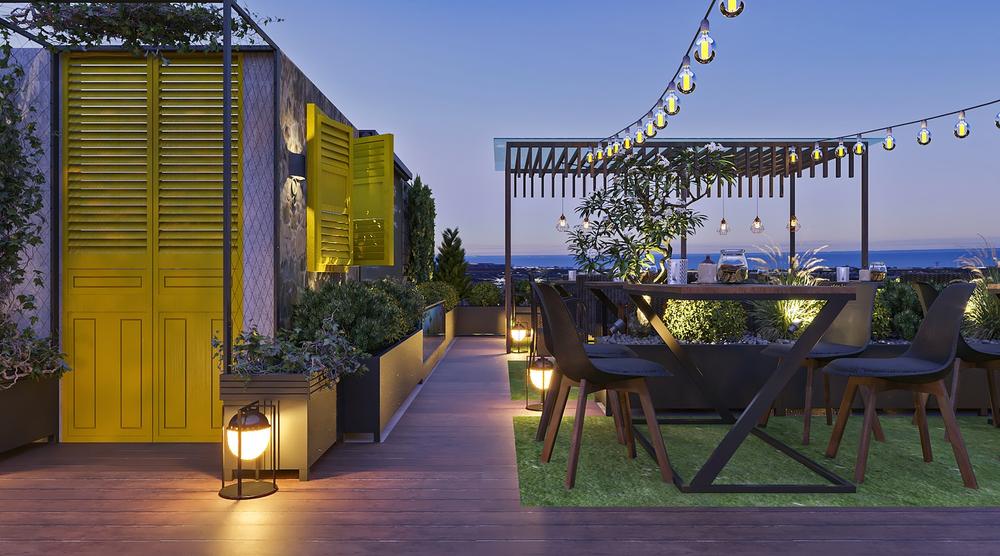
Overhead cable strung between posts, trees, or a house wall creates a ceiling where none exists. The lamps themselves become the decoration, and the warm glow between them defines a patio far more clearly than anything at ground level. Catenary wire carries the weight properly, since the cord alone stretches and sags over a season. Dimmable lamps let the same run serve a dinner and a party without rewiring anything. A dedicated outdoor circuit and a weather-rated receptacle keep the installation permanent rather than seasonal. Shatter-resistant lamps are worth the premium in a yard where a stray ball is a real possibility.
Choosing the Right Mix for Your Property
No single fixture type carries a whole property. What produces a finished result is a small combination, usually two or three types working at different heights and doing different jobs, chosen around the way you move through the space. The hardware is the easy part once that decision is settled. Buying fixtures first and figuring out placement afterward is what leaves a yard with lights everywhere and character nowhere.
Aaron’s Electrical Service selects and installs landscape lighting across the Houston and Dallas-Fort Worth areas, matching fixture types to the property rather than the other way around. Our licensed electricians handle the transformer, the buried runs, the controls, and the outdoor receptacles that string lighting depends on. We also install security lighting, parking lot lighting, and whole home surge protection, all backed by a lifetime workmanship warranty.
Not sure which types fit your yard? Call us at 281-719-0464 in Houston or 469-998-0097 in Dallas-Fort Worth to find out.
FAQs
Which fixture type should go in first?
Path lights, or whatever handles the routes people walk. Safety earns the first budget on any property, and steps, entries, and grade changes come before decorative work. Feature lighting for trees and walls builds on that foundation afterward. Reversing the order leaves a beautiful yard that is still awkward to cross at night.
Are well lights worth the extra cost?
They earn it where a visible fixture would spoil the look or sit in the way of maintenance. A canister at grade disappears by day and keeps a mower clear at night. Drainage is the deciding factor, since a housing that holds water in clay soil will fail early regardless of quality.
Can string lighting stay up year round?
Yes, with the right support and the right circuit. Catenary wire carries the weight so the cord does not stretch and sag, and a dedicated outdoor circuit with a weather rated receptacle turns a seasonal setup into a permanent one. Shatter resistant lamps are worth the small premium over a yard where balls fly.