

Quick Summary
Placement begins with purpose, so the first fixtures go where people walk, climb steps, and change direction after dark. Pathways read well at 300 lumens or less, while a work area near a garage sits comfortably between 300 and 800. Trees, facades, and focal points come next, with uplighting for a canopy, downlighting from height for a moonlit effect, and distance from a wall deciding whether the beam grazes texture or washes it evenly. Warm output between 2700K and 3000K flatters a yard, and fully shielded fixtures aimed no higher than 80 degrees from nadir keep spill off a neighboring property.
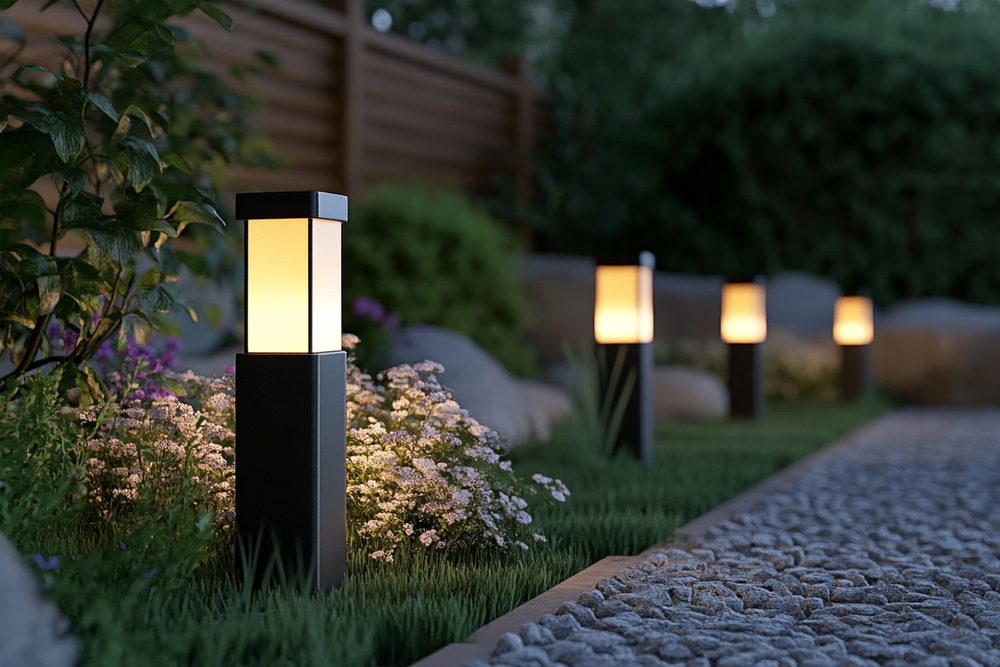
Evening changes the way a property reads. Shapes that felt ordinary at noon become flat and unreadable after sunset, while a single well aimed fixture can bring a live oak or a stone facade back into view. Homeowners across Texas invest in outdoor lighting fixtures every year, and the results vary widely depending on where those fixtures are installed. Questions about where to place landscape lighting come up long before anyone picks a style or a finish. Here is what quietly shapes those decisions, starting with the ground itself.
Start With How You Use Your Yard After Dark
Purpose comes before position in any serious lighting plan, and every fixture on a property should earn its spot with a clear job to do. Walk your property once the sun goes down and pay attention to where you actually move, which is usually the path from the driveway to the front door, the route to a back gate, and the steps between a patio and the lawn where the grade changes. Notice, too, the corners nobody visits after dark, since those areas rarely need a fixture at all. Shielding and careful aiming keep the beam pointed downward so light lands where it is wanted and stops well short of everywhere else. That single habit of asking what each fixture is for will eliminate half the placement mistakes people make in a typical yard.
Entryways, Steps, and Walkways Deserve Light First
Safety earns the first fixtures on any property, and the areas where people change elevation or direction deserve attention before anything decorative. A front entry benefits from light that reaches the door surface and the numbers beside it without shining into the face of anyone arriving. Along a walkway, fixtures spaced too evenly create an airstrip effect, so staggering them on alternating sides and letting the pools of light overlap gently produces a far more natural result. Brightness runs lower here than most people expect, and 300 lumens or less handles a pathway comfortably while 300 to 800 lumens covers a work area such as the space outside a garage. Steps and grade changes get their own treatment, usually with fixtures set into a riser or a nearby wall so the beam lands on the tread.
Trees, Facades, and Focal Points Change the Whole Yard
Once movement is handled, attention can turn to the features actually worth seeing. Uplighting placed at the base of a mature oak and angled into the canopy gives depth to a yard that would otherwise disappear at the fence line. Mounting a fixture high in a tree and aiming it down mimics moonlight across a lawn or a seating area, which reads as softer than anything at ground level. Distance from the surface controls the effect on a facade, since a light set close to brick or stone will graze the texture, while one set farther back will wash the wall evenly. Color temperature carries as much weight as position, and 2700K to 3000K appears warm white while 4000K and above reads cool or blue against the greenery of a Texas yard.
Placement Mistakes That Create Glare and Complaints
A beam that crosses someone’s sightline instead of landing on a surface produces the most common failure in a residential yard. Light trespass onto a neighboring property causes the second most common problem, and the fix is a fully shielded fixture aimed no higher than 80 degrees from nadir with total output held under 1,000 lumens. Overlighting undoes the rest, since your eyes adjust to the brightest point and everything around falls into shadow. Below the surface, the wiring carries its own set of rules under Article 411 of the National Electrical Code, covering the transformer, the buried runs, and the minimum cover over them. A licensed electrician sizes and sites that equipment so the system passes inspection and holds up in wet soil through a Gulf Coast storm season.
Building a Lighting Plan That Holds Up Year After Year
Good placement is a design decision followed by a wiring decision, and both benefit from someone who does this work every week. Aaron’s Electrical Service designs and installs landscape lighting across the Houston and Dallas-Fort Worth areas, handling fixture selection, aiming, transformer sizing, buried runs, and the controls that keep everything on a sensible schedule. Our team also covers security lighting, parking lot lighting for commercial properties, and outdoor receptacle circuits, along with whole home surge protection to guard the system you just installed. Every installation is backed by our lifetime workmanship warranty and a 100 percent satisfaction guarantee, and we take calls at any hour.
Want a lighting plan built around how you use your property? Call 281-719-0464 for Houston or 469-998-0097 for Dallas-Fort Worth, or schedule your service online.
FAQs
How far apart should path lights be spaced?
Spacing depends on the fixture beam spread and the width of the walkway, so no single number fits every yard. A good rule is to let the pools of light touch or overlap slightly rather than sit as isolated circles, and to stagger fixtures on alternating sides so the path never looks like a runway.
Is low voltage landscape lighting safe to install without an electrician?
The fixtures run at low voltage, but the transformer feeding them connects to a 120 volt circuit that has to be sized, protected, and located correctly. Buried runs carry minimum cover requirements, and connections sitting in wet soil need listed waterproof methods. A licensed electrician handles that side so the system passes inspection and lasts.
What color temperature works best outdoors?
Warm output between 2700K and 3000K reads closest to incandescent light and flatters brick, stone, foliage, and skin tone. Anything at 4000K or above turns cool and blue, which can make a yard feel like a parking lot. Staying warm also reduces glare and keeps light from spilling onto a neighbor’s property.