


Quick Summary
A two-prong receptacle sits on a circuit with no equipment grounding conductor, so the third slot has nothing to connect to. Section 406.4(D)(2) of the National Electrical Code permits three responses where no ground exists in the box, which are another non-grounding receptacle, a GFCI marked No Equipment Ground, or grounding-type receptacles fed through a GFCI and marked both ways. Running a real grounding conductor under Section 250.130(C) or replacing the circuit outright gives the strongest result. A jumper between neutral and ground defeats the tester while energizing appliance housings under a fault, and testing with proper instruments is what tells you which option applies to your home.
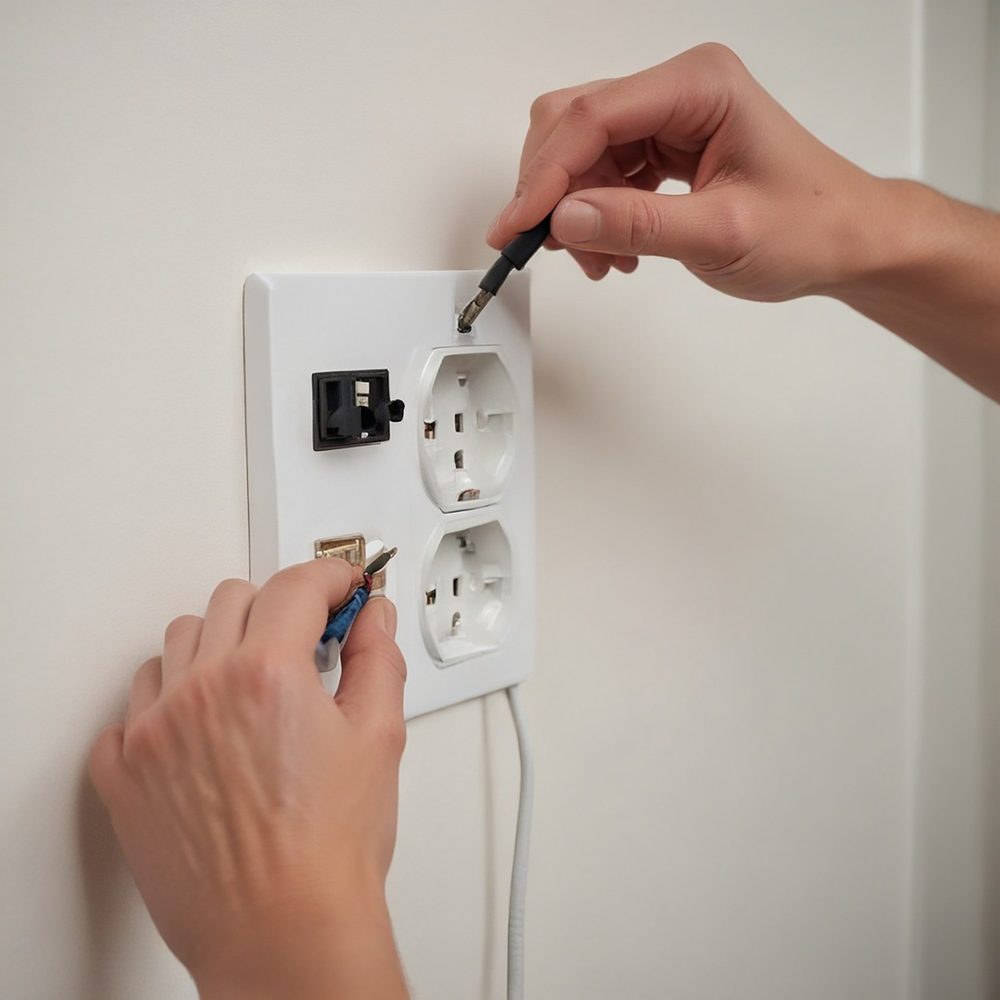
Older Texas homes hold a lot of two-prong receptacles, and every one of them traces back to a circuit installed before grounding became standard practice in residential construction. The gap shows up the first time you try to plug in a surge-protected power strip or a modern appliance with a three-prong cord. What follows is usually a search for how to convert 2-wire house wiring to a 3-wire ground, and the answers online range from perfectly sound to genuinely dangerous. Let’s separate the sound advice from the rest of it.
What Makes a Two-Prong Outlet Different From a Modern One
A modern branch circuit carries three conductors, one hot, one neutral, and one equipment grounding conductor that does nothing at all under normal operation. That third conductor exists for the moment something goes wrong, giving fault current a low-resistance path back to the panel so the breaker opens quickly. Circuits wired before roughly 1960 often carried only two conductors, which left no such path and no reason for a third slot in the receptacle. An outlet with two slots is telling you the truth about what is actually behind it. The trouble begins when someone installs a three-slot receptacle on that same two-wire circuit, since the appearance now promises protection the wiring cannot deliver. Understanding that distinction is the starting point for any conversion that is done properly and safely.
Testing Comes Before Any Device Gets Swapped
Assumptions cause most of the bad outcomes in this work, so the first step is finding out what the box contains. Some older homes ran two-wire cable with no grounding conductor at all, while others used armored cable or metal conduit that may still provide an acceptable grounding path. A licensed electrician verifies that path with proper instruments rather than a plug-in tester, since continuity and impedance both need checking. The condition of the box enters the picture, along with the condition of the conductors feeding it and whether earlier owners left surprises behind. Results vary from room to room in the same house, which is why a whole home evaluation beats testing one outlet and generalizing. What you find determines which of the permitted options is available to you.
Code-Compliant Paths to a Grounded Receptacle
Section 406.4(D)(2) of the National Electrical Code sets out what is permitted when no equipment grounding conductor exists in the box. You may install another non-grounding receptacle, install a GFCI marked No Equipment Ground, or install grounding-type receptacles fed through a GFCI and marked both GFCI Protected and No Equipment Ground. Running an actual grounding conductor remains the strongest answer, and Section 250.130(C) allows that conductor to land at an accessible point on the grounding electrode system, on the grounding electrode conductor, or on the equipment grounding terminal bar in the enclosure where that branch circuit originates. Full replacement of the circuit is the fourth route, and it leaves nothing labeled or qualified. Which one fits depends entirely on what the testing turned up.
Why a Bootleg Ground Is the Worst Possible Shortcut
A jumper wire between the neutral terminal and the ground screw takes about ten seconds to install, and it will make an inexpensive tester show a properly grounded outlet. What it does in reality is bond the grounded conductor to the equipment grounding path on the load side of the service, which the Code prohibits. Neutral current then travels on a path that should carry none, and a break or loose connection upstream can leave the metal chassis of an appliance energized at full line voltage. The danger is worse than an open ground, since the outlet now passes the very test that would have flagged a problem. Home inspectors find this arrangement regularly in properties where someone tried to save money on a rewire.
What GFCI Protection Covers and What it Leaves Exposed
Imbalance between the hot and neutral conductors is what triggers the device, and it cuts power in a fraction of a second. That behavior protects people, which is why the Code accepts it as a substitute for grounding when replacing old receptacles. Equipment protection is a separate question, since surge protective devices need a real grounding conductor to divert energy away from whatever is plugged in. A power strip labeled for surge protection will work as an ordinary strip on an ungrounded circuit and nothing more. Sensitive electronics, some medical equipment, and certain appliances also list a grounding conductor as a manufacturer requirement. Knowing where the line sits helps you decide whether a device swap is enough for the rooms that hold your expensive equipment.
Labels, Permits, and Records That Protect You Later
Markings form part of the installation rather than an optional finishing touch. A GFCI replacing a non-grounding receptacle has to carry No Equipment Ground on the receptacle or its cover plate, and downstream grounding-type receptacles fed through it need both GFCI Protected and No Equipment Ground. Those words tell the next person what they are working with, whether that person is an inspector, a future buyer, or an electrician twenty years from now. Permitted work leaves a record with your jurisdiction, which carries weight during a sale and during an insurance claim. Keep the invoice and the signed scope of work alongside your other home documents. Details like these separate a finished job from one that raises questions years later.
Upgrading Your Outlets the Right Way
Grounding is one of those improvements that stays invisible until the day it does its job. Choosing between a device swap, a new conductor, and a fresh circuit comes down to what the wiring behind the wall will support, and that answer arrives through testing rather than assumption. Getting it right once costs less than living with an outlet that only looks safe.
Aaron’s Electrical Service tests, upgrades, and rewires ungrounded circuits throughout the Houston and Dallas-Fort Worth areas, and our licensed electricians pull the permits and label the work the way the Code requires. We handle GFCI and AFCI installation, dedicated circuits for appliances and home offices, panel replacement, and whole-home surge protection that finally has somewhere to send the energy. All of our work carries a lifetime workmanship warranty.
Tired of hunting for a grounded outlet? Call 281-719-0464 in Houston or 469-998-0097 in Dallas-Fort Worth to book an evaluation for your home.
FAQs
Can I just swap a three-prong receptacle onto a two-wire circuit?
That installation is prohibited and it creates a false impression of safety. The outlet would accept a grounded plug while offering no fault path at all. Permitted alternatives are a GFCI marked No Equipment Ground, grounding-type receptacles fed through a GFCI with both required markings, or a new grounding conductor run to an approved point.
Does a GFCI make my ungrounded outlet safe for electronics?
It protects people, which is the reason the Code accepts it. Equipment protection is different. Surge protective devices need a grounding conductor to divert energy, so a surge strip on that circuit works as an ordinary strip. For a home office or media room, running a real grounding conductor is the better investment.
Do the outlets really need labels?
Yes. A GFCI replacing a non-grounding receptacle carries No Equipment Ground on the device or its cover plate, and downstream grounding-type receptacles need both GFCI Protected and No Equipment Ground. Those markings tell an inspector, a buyer, or the next electrician what they are dealing with, and their absence raises questions during a sale or a claim.