


Quick Summary
An open ground means the round slot on a receptacle has no return path to the panel, which leaves the outlet fully functional and the protection missing. Causes range from a three-slot device installed on two-wire cable to a severed conductor, a loose terminal screw, or a break somewhere in a metal conduit path. Nothing trips a breaker during a fault, and surge protective devices lose the reference they depend on. Correction depends entirely on the diagnosis, whether that means reterminating an existing conductor, running a new one to an approved point under Section 250.130(C), applying ground fault protection with the required markings, or replacing the circuit.
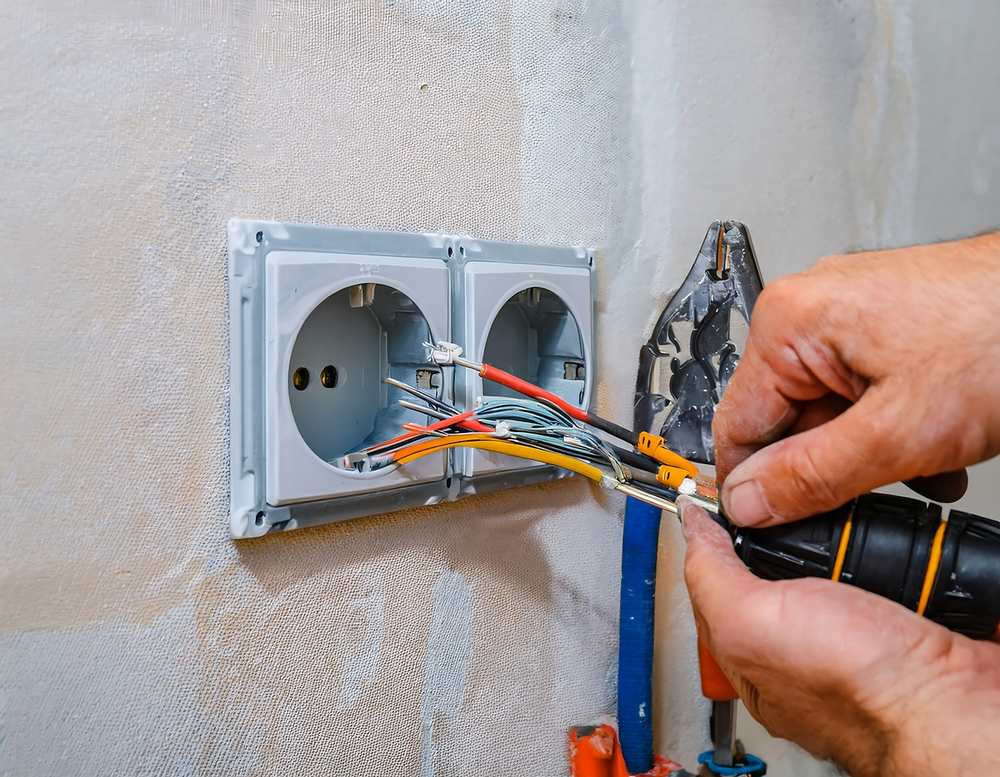
Plug an inexpensive tester into a receptacle, and the lights give you a verdict in about a second. When the label beside that pattern reads open ground, the outlet still powers the lamp next to it as though nothing were wrong. Older Texas homes produce that result constantly, and so do houses built long after grounding became routine. That contradiction is what sends most homeowners searching for how to fix an open ground outlet before they understand what the reading actually describes.
Here is what really sits behind that reading.
What It Means
Three slots in a receptacle imply three conductors behind it, and the round slot is supposed to connect to an equipment grounding conductor that runs all the way back to the panel. That conductor carries no current during normal use, waiting instead for a fault so it can give the current a low-resistance route home and force the breaker to open. When a tester reports the condition in question, it is saying the round slot has no such route. Power still flows through the hot and neutral conductors, which is why lamps, televisions, and chargers all behave completely normally. The outlet works, and the safety feature built into it simply does not. That single sentence explains why the problem goes unnoticed for years in perfectly comfortable, fully occupied homes.
Common Causes Behind That Reading
More than one backstory produces the very same result on a tester. The most frequent one is a three-slot receptacle installed on a two-wire circuit, usually by a previous owner who wanted a modern outlet without the wiring to support it. A grounding conductor that was cut, never landed on the terminal screw, or left loose inside a crowded box produces the identical reading on a circuit that should have been fine. Metal conduit and armored cable can serve as the grounding path in some older installations, and a single corroded coupling or a plastic box in the middle of that run breaks the continuity. Rodents, remodeling, and hurried repairs all take their toll on connections nobody has looked at in decades. Each cause carries a different repair, so diagnosis comes first.
Risks Hiding Behind an Outlet That Still Works
Convenience is what makes this condition dangerous, since nothing about daily use signals a problem. A washing machine, a window unit, or a metal lamp base develops an internal fault, and without a grounding path, the fault current has nowhere to go except through whoever touches the housing next. The breaker never trips, since it needs a surge of current to sense a fault in the first place. Surge protective devices face the same limitation, and a power strip on that circuit offers no protection to the computer plugged into it. Insurance adjusters and home inspectors both flag the condition, which turns a hidden issue into a documented one at the worst possible moment. None of that is visible from the front of a working receptacle.
Why a Plug-In Tester Can Mislead You
Those inexpensive devices are quite useful, though they answer a narrower question than most people assume. What they check is whether voltage appears between the round slot and the hot slot, and a bootleg ground satisfies that check perfectly. Someone who ran a jumper from the neutral terminal to the ground screw has created a circuit that reads correct on the tester while putting neutral current on the grounding path. An appliance chassis can sit energized under a fault in that arrangement, and the tester will keep showing a clean result. A licensed electrician verifies the path with instruments that measure continuity and impedance all the way back to the panel. Passing a lights-based test proves considerably less than most homeowners believe that it does.
Repair Paths That Bring the Circuit Into Compliance
Correcting the condition starts with what the testing found. Where a grounding conductor exists and came loose or was never terminated, reconnecting it at the device and at the box restores the path immediately. Where no conductor exists at all, Section 250.130(C) allows a new one to land at an accessible point on the grounding electrode system, at an accessible point on the grounding electrode conductor, or at the equipment grounding terminal bar in the enclosure where that branch circuit originates. Ground-fault protection provides a third route, and receptacles handled that way carry markings that read GFCI Protected and No Equipment Ground. Removing a bootleg jumper without addressing the underlying circuit leaves you at an ungrounded three-slot outlet, so that step never stands alone.
When Replacing the Circuit Beats Patching It
Some situations argue for new wiring rather than a correction made at the device itself. Cloth-insulated conductors that crumble when touched, boxes packed past their fill capacity, and circuits already carrying more load than they were sized for all point toward replacement. Kitchens, laundry rooms, and home offices tend to justify the work on their own, since those spaces need dedicated circuits regardless of the grounding question. A new home run also brings the circuit under current requirements for arc fault and ground fault protection, which a repair at the receptacle cannot accomplish. The cost difference narrows once you count the number of devices a patch would have to cover across a whole floor of the house.
Getting Your Grounding Sorted for Good
A reading on a tester is a starting point rather than a diagnosis, and the right correction depends entirely on what the wiring behind the wall turns out to be. Homes vary from room to room, and so do the fixes. Treating the outlet as a symptom instead of the problem is what separates a repair that holds from one that only changes the color of the lights.
Aaron’s Electrical Service diagnoses and corrects grounding faults across the Houston and Dallas-Fort Worth areas, and our licensed electricians test the circuit properly before quoting a repair. We install dedicated circuits, GFCI and AFCI protection, replacement panels, and whole home surge protection that finally has a path to work with. All of our work is permitted, labeled, and covered by a lifetime workmanship warranty.
Seeing an open ground on your tester? Call 281-719-0464 in Houston or 469-998-0097 in Dallas-Fort Worth and we will find the real cause.
FAQs
Is it safe to keep using an outlet that tests open ground?
The outlet will power a lamp or a phone charger without incident. What it will not do is carry fault current away from an appliance housing, which is the situation that puts a person at risk. Anything with a metal enclosure or anything expensive enough to need surge protection should wait until the circuit is corrected.
Why does one outlet test open while the one beside it tests fine?
Grounding travels through a chain of connections, and a break anywhere along it affects everything downstream. A conductor left off a terminal screw, a loose splice in a crowded box, or a plastic box interrupting a metal conduit path will produce that pattern. Testing several outlets on the circuit usually reveals where the break sits.
Will a GFCI fix an open ground?
It addresses the shock hazard without creating a grounding path. That distinction is why the Code requires the receptacle to be marked No Equipment Ground once it goes in. Surge protection still has nowhere to send energy, and equipment that lists a grounding conductor as a requirement remains unsupported. It is a permitted answer rather than a complete one.