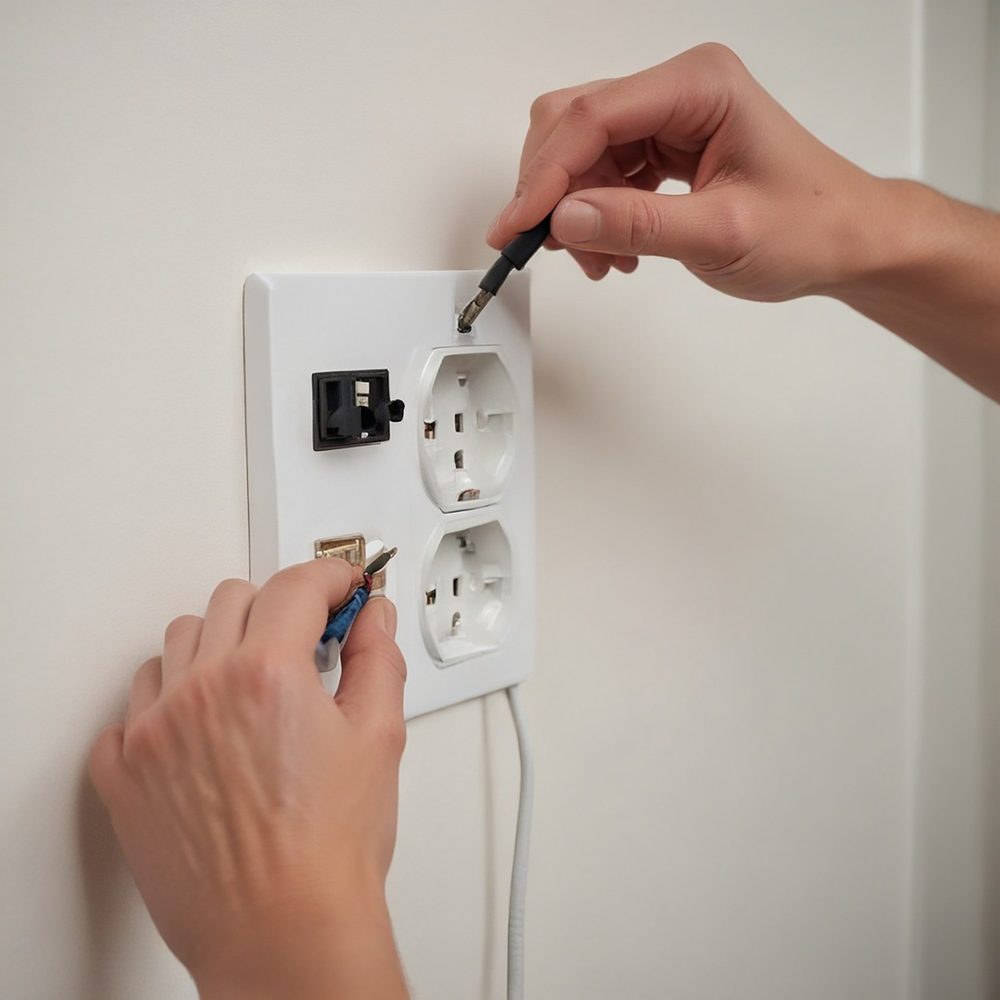


Quick Summary
Electrical shorts often come from damaged wiring, worn insulation, loose connections, moisture, faulty devices, overloaded circuits, aging panels, or improper electrical work. Warning signs such as sparks, burning odors, buzzing outlets, warm wall plates, flickering lights, and repeated breaker trips should be taken seriously. Professional troubleshooting helps identify the source of the problem and supports safer repairs for homes and businesses.
A sudden breaker trip, spark, burnt odor, or dead outlet can make any property owner pause. Electrical current should follow a controlled path through wires, devices, and protection equipment. A short happens when that current moves through an unintended path instead. Understanding what causes an electrical short can help you recognize when something may be unsafe before the problem grows. Your home or business may show signs through buzzing sounds, flickering lights, warm outlets, or repeated breaker trips.
Let’s walk through the most common causes so you know what these warning signs may point to.
Damaged Wiring and Worn Insulation
Protective insulation keeps electrical current contained as it moves through wiring, cords, and connected devices. Age, heat, pests, impact damage, or repeated bending can weaken that covering until the conductor becomes exposed. Once bare wiring touches another conductor, metal box, grounded surface, or nearby component, current can move where it should not go. That unintended contact can create sparks, heat, smoke, or a tripped breaker. You may notice dark marks near an outlet, a cord that feels hot, or a burning smell near a fixture. These signs should be taken seriously, especially in older homes, attic spaces, crawl spaces, garages, and areas with frequent appliance use.
Loose Connections Inside Outlets, Switches, or Panels
Small separation at a terminal, splice, breaker, outlet, switch, or fixture can interrupt steady current flow and create unsafe heat. A connection may loosen from vibration, repeated plug use, aging parts, or previous work that was not secured correctly. Current can jump across the weak contact point, which may lead to buzzing, flickering lights, arcing, or a breaker that trips when one device starts. This type of problem often stays hidden behind a wall plate or inside a breaker box. That is why sounds, smells, heat, and intermittent power changes should be treated as useful warning signs, not random inconvenience.
Moisture Around Electrical Components
Even a small leak can create a dangerous path for current when water reaches outlets, wiring, panels, fixtures, or appliances. Risk increases in kitchens, bathrooms, garages, laundry rooms, patios, crawl spaces, and outdoor areas with damaged covers or exposed connections. Rain intrusion, plumbing leaks, flooding, condensation, and poor sealing can all bring moisture into places where it does not belong. A moisture-related short may cause immediate breaker trips, sparks, stains near an outlet, or power loss in one section of the property. Wet electrical areas should be avoided until a licensed electrician can inspect the source and restore safe operation.
Faulty Devices, Appliances, and Overloaded Circuits
A failing appliance can create short circuit conditions when internal wiring, heating elements, motors, switches, or plugs break down. Warning signs may include a burnt smell, sudden shutdown, cracked casing, missing grounding pin, bent plug prong, or frayed cord. Heavy electrical demand can also strain a circuit, especially when multiple high-draw devices share the same outlet or breaker. Over time, overheating can weaken insulation and make hidden defects more serious. Extension cords used as permanent wiring can also point to an outlet capacity problem. Safer planning starts with knowing whether your circuits, outlets, and panel can support the equipment you rely on each day.
Get Ahead Of Electrical Shorts With Trusted Professional Support
An electrical short can point to damaged wiring, loose connections, moisture, faulty devices, overloaded circuits, aging panels, or unsafe past work. These issues can affect comfort, equipment reliability, and property safety, so quick professional attention is the right move when warning signs appear. At Aaron’s Electrical Service, we help homeowners and businesses find the source of electrical trouble with licensed electricians, customer-first service, 24/7 availability Monday through Saturday, a satisfaction guarantee, and a lifetime workmanship warranty. We can assist with emergency electrical response, breaker boxes, service changes, panel changes, generators, EV charging, and other residential or commercial electrical needs.
Call us when you notice sparks, odors, buzzing, warm outlets, or repeated breaker trips. We are ready to help you move forward with safe, dependable electrical service.
FAQs
What is the most common cause of an electrical short?
Damaged wiring and worn insulation are among the most common causes. When protective insulation breaks down, exposed wires can touch another conductor, metal surface, or grounded part. This can create heat, sparks, tripped breakers, or burning odors. Loose connections and faulty devices can also create similar short circuit risks.
Can an overloaded circuit cause an electrical short?
An overloaded circuit is different from a short circuit, but it can still create unsafe conditions. Too much electrical demand can overheat wires, weaken insulation, and make hidden wiring problems worse. If breakers trip often, outlets feel warm, or lights flicker when devices run, the circuit should be inspected by a licensed electrician.
What should I do if I think I have an electrical short?
Stop using the affected outlet, device, or circuit if you notice sparks, buzzing, burning smells, warm wall plates, or repeated breaker trips. Avoid opening outlets, panels, or wiring on your own. Electrical shorts can involve hidden hazards, so professional troubleshooting is the safest way to find the source and correct the issue.