

Quick Summary
Aluminum wiring was common in homes built from the mid 1960s to the mid 1970s. You can spot it by looking for a dull silver color, the word “AL” or “ALUMINUM” stamped on the plastic wire jacket, and signs like warm outlets or flickering lights. This guide shows you how to tell if house has aluminum wiring and what to do next.
If your home was built between 1965 and 1973, it may have aluminum wiring. At that time, builders used it because copper was very expensive. But today, we know this wiring can be a fire risk if not handled correctly. Learning how to tell if house has aluminum wiring is the first step to keeping your family safe.
For professional electrical panel installation, our team is here to help. In this article, we will show you exactly where to look and what signs to watch for.
Check the Age of Your Home
The first clue is your home’s age. Builders used aluminum wiring heavily from about 1965 to 1973. If your home was built during these years, there is a good chance it has aluminum branch circuits. We always remind homeowners that age alone is not proof, but it is a strong signal to look closer.
Look at the Electrical Panel
One of the easiest places to spot aluminum wiring is inside your main electrical panel. A licensed electrician can remove the panel cover and look at the wires connected to the breakers. However, we strongly advise against removing the cover yourself. Working inside a live panel is very dangerous.
If you can safely see exposed wires near the panel, check their color. Aluminum wire looks dull silver, like the color of a soda can. Copper wire has a reddish-brown color. Also, look for the letters “AL” or the word “ALUMINUM” printed on the wire’s outer jacket. These markings repeat every few feet along the cable.
Inspect Unfinished Areas Like the Attic or Basement
You can also look in unfinished spaces where wires are easy to see. Check your attic, basement, garage, or crawlspace. These areas often have exposed electrical cables running along joists or through studs.
When you find a cable, use a flashlight. Shine the light at a low angle across the wire’s surface. Look for printed markings that say “AL,” “ALUMINUM,” or “ALUMINUM 600V”. If you see these markings, you have aluminum wiring. Also, note the wire’s color. If it is shiny and silver instead of reddish-brown, that is another sign you have aluminum wiring.
Check Outlets and Switches (Carefully)
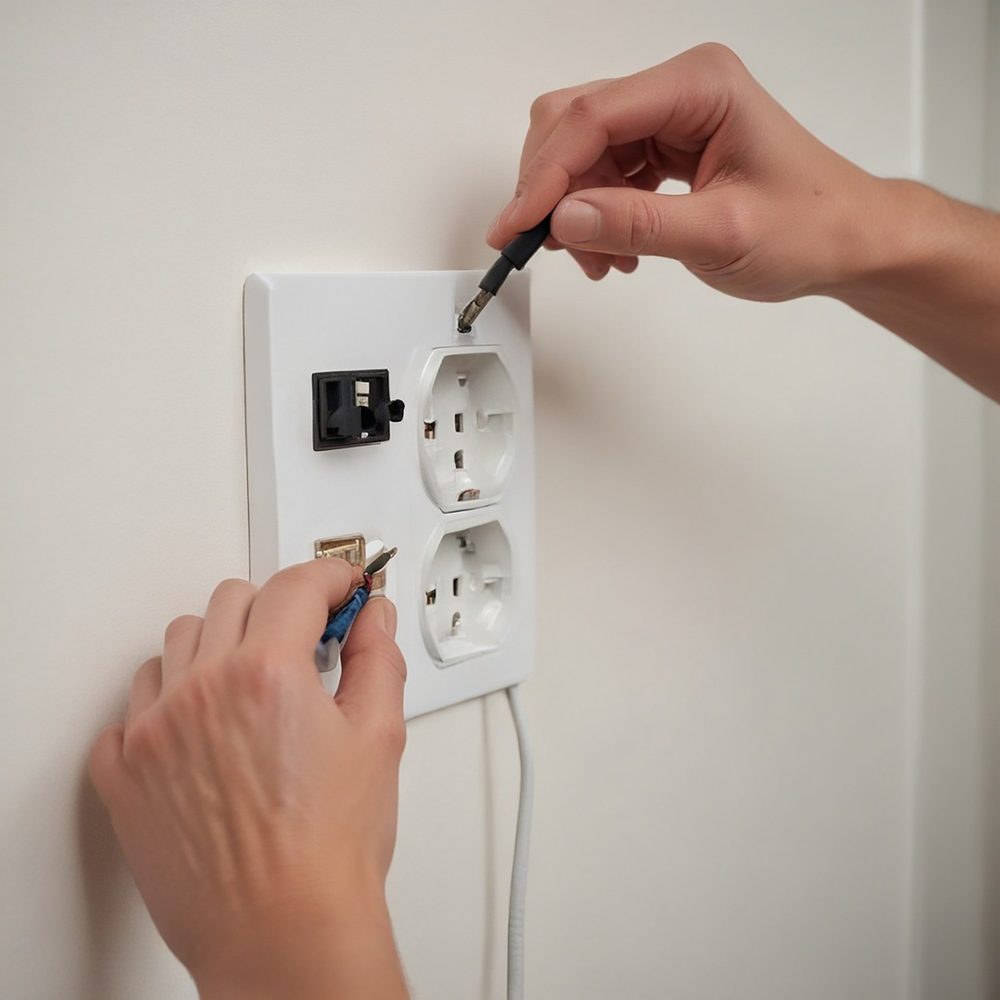
Inside your home, you can check a few outlets or switches without touching live wires. First, turn off the power at the breaker for the room you are checking. Then remove the outlet cover plate. Do not touch any wires inside. Just look at the wire color visible near the back of the outlet box. If you see silver-colored wires, that points to aluminum.
Also, check the outlet or switch itself for markings. Safe devices for aluminum wiring will say “CO/ALR” (copper/aluminum revised) on them. If you see “CU” or “copper only” markings, those devices are not safe for aluminum wire.
About Aaron’s Electrical Service
At Aaron’s Electrical Service, we are a Christian family-owned company serving DFW homeowners with licensed electricians and a lifetime workmanship warranty. We have helped hundreds of families identify and safely repair aluminum wiring.
Our team offers free inspections and clear, honest pricing. We are available Monday through Saturday, 24 hours a day for emergencies. When you need commercial electrical repairs and replacements or help with your home’s wiring, we are here to assist.
Watch for Warning Signs of Trouble
Even if you cannot see the wires, certain warning signs may mean you have aluminum wiring that is becoming unsafe. The U.S. Consumer Product Safety Commission (CPSC) lists several red flags:
Warm or hot outlet covers or switch plates
Flickering lights that come and go
A burning smell near outlets or switches
Sparking or arcing when you plug something in
If you notice any of these signs, call a licensed electrician right away. Do not ignore them. These problems often happen at the connections where aluminum wire meets outlets, switches, or other devices.
Why Aluminum Wiring Is a Concern
Aluminum wiring expands and contracts more than copper when it heats up and cools down. Over time, this movement can loosen the connections at outlets, switches, and breakers. Loose connections cause heat, which can melt insulation and start a fire.
According to the U.S. Consumer Product Safety Commission, homes with aluminum wiring have a much higher risk of fire-related problems compared to homes with copper wiring. At Aaron’s Electrical Service, we take this risk very seriously and always recommend professional repair or replacement.
Another issue is insurance. Many home insurance companies will not cover homes with single-strand aluminum wiring, or they will charge much higher premiums. Some insurers require a full inspection and certified repairs before they offer coverage.
What to Do If You Have Aluminum Wiring
Finding aluminum wiring in your home does not mean you need to panic. But you do need to take action. The CPSC recommends two main repair methods approved for homes:
CopAlum crimp method – A special connector permanently joins a copper pigtail to the aluminum wire. This is considered the most reliable fix.
AlumiConn connectors – Screw-down connectors that safely join aluminum to copper at each outlet, switch, and fixture. Many insurers accept this method.
A full rewire is another option. Replacing all the aluminum wire with new copper wiring costs between $8,000 and $20,000 for a typical home, depending on size and complexity. For professional circuit breaker repair and replacement, our team is ready to help you upgrade your home’s electrical system.
We always tell homeowners: do not try to fix aluminum wiring yourself. Special connectors, tools, and training are required. A licensed electrician will do the job safely and make sure it passes local codes.
FAQs
Can I just replace one outlet if I find aluminum wiring?
No. If your home has aluminum branch wiring, the entire circuit needs to be addressed. Simply changing one outlet without correcting the connections elsewhere leaves a fire risk. A licensed electrician should inspect the whole system.
Is aluminum wiring legal in new homes today?
No, modern building codes do not allow solid aluminum wire for branch circuits. However, larger aluminum feeders for heavy appliances (like ovens or dryers) are still permitted and considered safe when installed correctly.
My outlets say “CO/ALR.” Does that mean my wiring is safe?
CO/ALR outlets and switches are designed for aluminum wire, which is safer than using standard devices. However, the entire wiring system still needs proper connections at every junction. A full inspection is still important. We can check your home and give you honest advice.
How do I know if my home insurance will cover aluminum wiring?
Many insurers require proof that aluminum wiring has been repaired using CPSC-approved methods like CopAlum or AlumiConn. Call your insurance agent and ask about their specific requirements. If you need documentation after repairs, our team can provide it.